

ACTS is a fully automated and objective testing and analysis system for various communication devices and intelligent terminal voice calls, as well as noise reduction performance, adapted to the latest audio technology. It includes two main modules:
► ACTS-AQA
► ACTS-MM
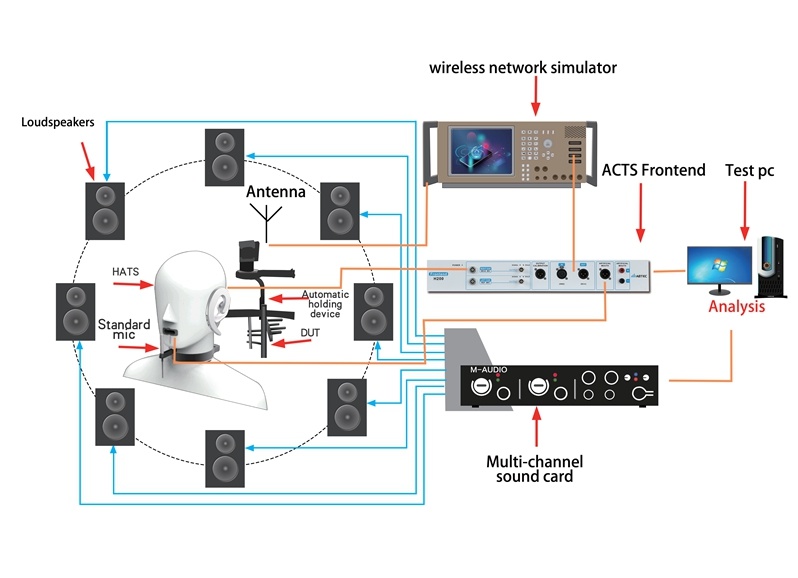
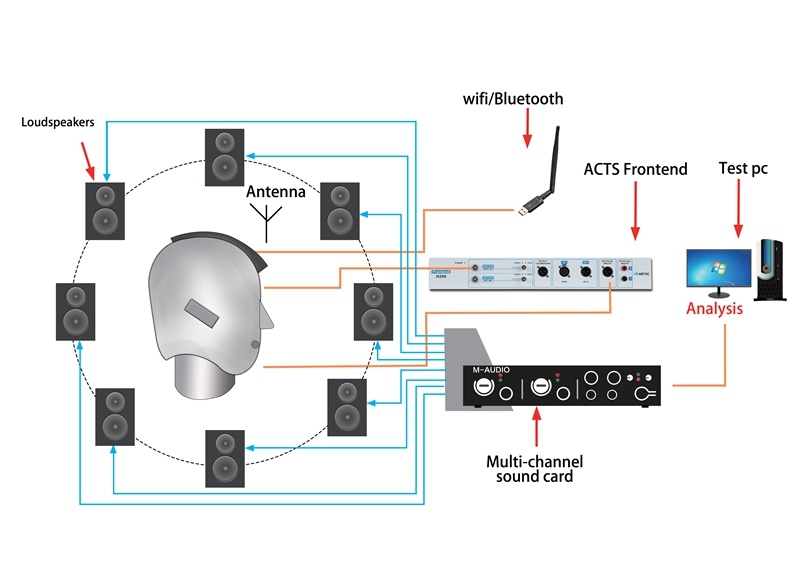
Mobile voice testing system Earphone testing system
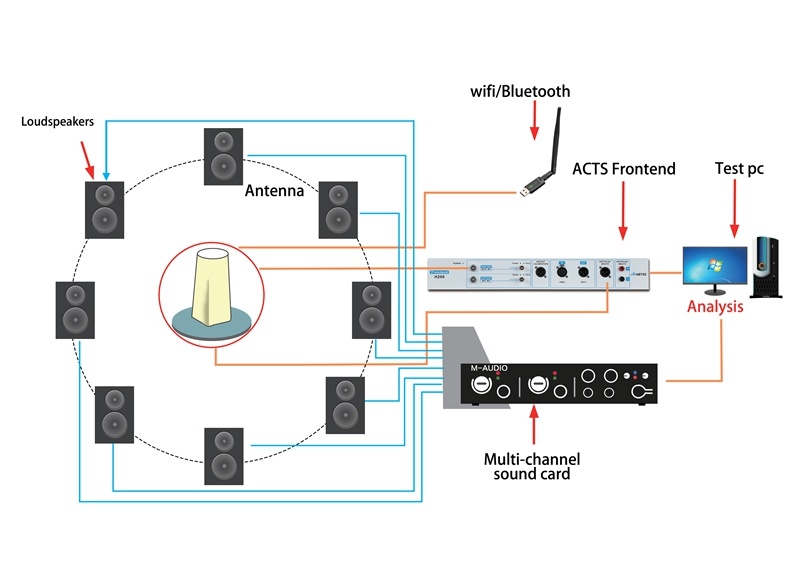
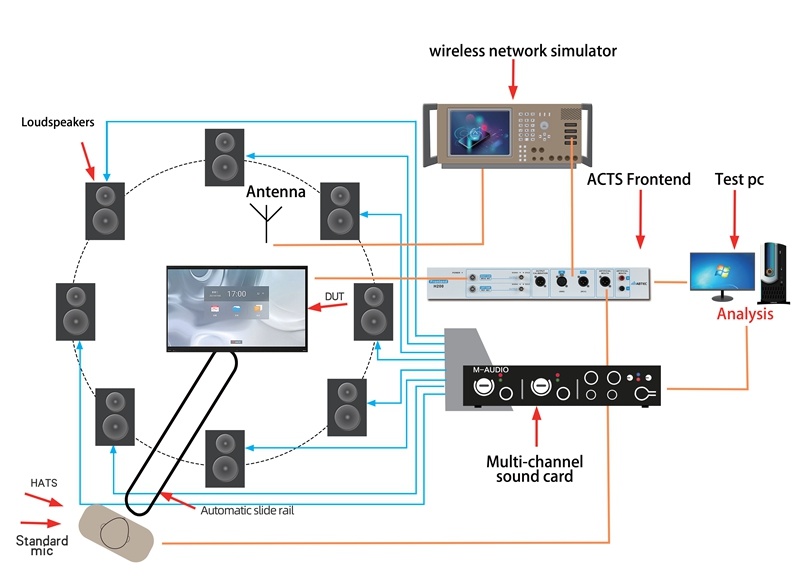
Car call testing system Smart Large Screen Testing System
Objective speech quality testing is an advanced technology used to evaluate audio clarity, intelligibility, and performance in communication systems. It helps manufacturers and developers ensure stable and accurate voice transmission in telecom, VoIP, and multimedia applications.
This solution uses standardized algorithms to measure distortion, noise, and signal quality, providing reliable data for product optimization and quality control. It reduces subjective errors and improves testing efficiency in R&D and production environments.
It is widely used in telecom operators, device manufacturers, and software developers to enhance user experience and ensure high-quality voice communication.
⦁ ACTS-AQA module
The voice call test includes two parts, namely the standard part and the tracking of new technologies or products part. ACTS-AQA is the standard part test, mainly used to analyze the conventional performance indicators of telecommunications and car communication audio, and meet national/international operator standards.
main standard
Telecommunications standards:
► YD/T 1538-2014
YD/T 1884-2013 (corresponding to international standards EN50332-l and EN50332-2)
CMCC Mobile Phone Testing Standards
► 3GPP2 (3GPP standard)
► 3GPP TS 26.131 /132
► 3GPP TS 26.131 /132 (SWB/FB)
► 3GPP TS 51. 010-1
► ITU-T G.165 (ITU standard)
► ITU-T G.160 Amendment 1 2012
► ITU-T G. 862
► ITU-T G. 863 POLQA
► 5-MOS/N-MOS
► Vodafone VFTST-Audio-NB
► Vodafone VFTST-Audio-WB
► Vodafone VFTST-Audio-SWB/FB
Car communication standard:
► GOST 33468-NB
► GOST 33468-WB
► ITU-T P.1100
► ITU-T P.1110
► ITU-T P.1120
► ITU-T P.1140NB
► ITU-T P.l 140WB
⦁ ACTS-MM module
An objective audio detection system that synchronizes with the development of intelligent voice technology, enabling objective testing of voice calls, human-computer interaction, and music/games on intelligent terminals.
Main Features
►Accurate reproduction of noise field
► Adjustable indoor reverberation field construction
►Provide objective standards for quality assurance and acceptance, ensuring consistency between laboratory and practical applications, thereby improving the satisfaction of intelligent terminal users
►Provide objective evaluation criteria for various noise reduction and sound pickup schemes, and provide discrimination and improvement basis for each stage of design and manufacturing
► Ensured consistency between audio and voice interaction on smart terminals
►Provide effective tools for audio performance debugging
System Features
The objective testing in the laboratory is consistent with the user experience in practical applications
Accurately evaluate performance and increase user satisfaction
Track the latest developments and applications of audio technology
Strictly reproducible
The testing performance is consistent across different laboratories and operators
► Correct comparability and clear positioning of issues
Only with strict repeatability can the performance advantages and disadvantages of various phones be strictly compared
The benefits of automated testing
► Ensure strict repeatability, minimize manual intervention, accuracy, and objectivity
► Save testing manpower and do not waste valuable talents on repetitive and error prone labor
► Improve efficiency, avoid duplicate testing, and prevent human errors
⦁ ACTS testing software
⦁ ACTS-AQA (S200) Network Call Standard Testing Software
Specially developed software for testing network call standards, mainly for testing the quality of 3GPP standard voice calls.
Basic testing items
Sending end delay
Receiver delay
Transmitting Loudness (SLR)
Receiver Loudness (RLR) - Intermediate Volume/Maximum Volume/Minimum Volume - Idle Noise at the Sending End
Idle noise at the receiving end - normal volume/minimum volume
Sending end frequency response (SFR) -1/12 octave band
Receiver frequency response (SFR) -1/12 octave band
Acoustic echo cancellation performance - normal volume/maximum volume
Double talk performance
Distorted sender
Receiver distortion
⦁ Noise playback system equalization software ACTS-BGN (S300)
S300 is a noise playback system equalization software that achieves noise playback by controlling four speakers to produce sound. It is mainly used for testing the 3QUEST (SMOS/NMOS/GMOS) module in S200 (if testing 3QUEST in S200, it is necessary to calibrate the four speakers in S300 in advance).
Main Features
Complies with the ETSI-EG 202396-1 and ETSITS 103 224 standards, supporting two calibration methods. The interface for dual ear equalization and single microphone equalization calibration is simple, intuitive, and easy to operate
The calibration results can be saved for use by S200 and S400
⦁ Multi microphone denoising system basic testing software ACTS-MM (S400)
S400 is the basic software for controlling, calibrating, configuring, and testing the ACTS-MM section. The basic testing project consists of two parts. The first part mainly focuses on the uplink testing of mobile phones, that is, after calling the phone, the artificial mouth and noise are simultaneously played to measure the external pure mixed sound without noise reduction algorithm recorded by the standard microphone and the processed sound with internal algorithm, transmission loss, and device quality recorded by the main microphone of the phone to analyze the mobile phone noise reduction algorithm. The second part includes speech recognition, voice wake-up, and speech synthesis testing for human-computer interaction. In addition, optional configuration modules are provided to expand testing capabilities.
Main Features
Includes standard near end voice and customizable or externally input near end voice bandwidth, including narrowband, broadband, and ultra wideband
Contains various standards and pre-set noise libraries (static and motion)+customizable and externally input noise libraries
4 pre-set signal-to-noise ratios+customizable signal-to-noise ratios
Reproduction of various noise fields
Basic testing items
Near end voice intensity after noise reduction Voice Level
Noise Suppression after Denoising (ITU-T P.835 Amendment 1 Objective Test)
Noise reduction performance under noise
Polar Pattern for Eliminating Noise in Various Directions
Speech recognition rate test
Voice wake-up rate test
speech synthesis
⦁ ACTS optional module
⦁ POLQA Voice Quality Measurement Module (LQT10)
POLQA is an extension and update of PESQ (ITU-T P.862), which is a testing standard for voice quality in new generation fixed, mobile, and IP networks. The new ITU-T P.863 standard, POLQA supports high-definition quality speech coding and network transmission technology, with higher accuracy for 3G, 4G/LTE, and VoIP networks.
POLQA mainly scores the speech quality in quiet and noisy environments. The higher the score, the better the speech quality. According to the standard definition, it is divided into narrowband speech and ultra wideband speech quality scores:
Narrowband voice POLQA score range: 1~4.5, ultra wideband voice POLQA score range: 1~4.75. The same narrowband voice has different POLQA scores in narrowband and ultra wideband. In narrowband score, high-frequency loss is not considered, while in ultra wideband score, high-frequency loss of narrowband signal is considered.
⦁ 3QUEST objective testing module for noisy speech quality (MOS30)
Based on the ETSI EG 202 396-3 and TS 103 106 standards, ETSI is an objective testing standard for denoised speech and residual noise, including testing modes under narrowband and broadband background noise. 3QUEST can effectively evaluate the transmission quality of speech in the presence of various background noises, obtaining three MOS scores: S-MOS, N-MOS, and G-MOS. S-MOS represents the transmission performance of speech signals, N-MOS represents the performance of background noise suppression, and G-MOS represents the overall performance.
► S-MOS: Objective Speech Quality Assessment Ignoring the Influence of Residual Noise
► N-MOS: Objective quality assessment only for residual noise
► G-MOS: Objective Speech Quality Assessment for Global Measurement of Speech and Residual Noise
⦁ Near end voice long-distance mixing environment module (SRVB10)
SRVBlO is a laboratory production system designed for measuring speech mixing environments. It mainly uses a thousand anechoic chamber and can adjust different room sizes, RT60, and wall sound absorption coefficients to produce different indoor reverberation scenes. Various speech reverberation scenarios are mainly generated by HATSl00's artificial mouth and 8 or 10 monitoring grade speakers.
⦁ ITU-G160SNRi denoising signal-to-noise ratio improvement testing module (SNRi20)
The international standard ITU-T G.760 for signal-to-noise ratio improvement testing measures the signal-to-noise ratio improvement, denoising strength, and denoising balance of denoising processing under various types of noise.
Specific parameters:
► SNRi: Improved measurement of signal-to-noise ratio after denoising, where a larger SNRi value indicates a greater improvement in signal-to-noise ratio
► TNLR: The total noise reduction dB after noise reduction, with a larger value indicating more noise reduction
► DSN: The degree to which the near end speech is reduced or amplified after noise reduction. Positive values indicate that the speech is reduced, while negative values indicate that the speech is amplified or there is too much residual noise. The closer the DSN is to 0, the better. Generally, - S<DSN<S
► DNRSL: The difference in the strength of noise suppression between the mixed and pure noise segments after denoising, with a value closer to 0 being better, generally -5<DNRSL<5.
⦁ Speech Objective Quality Improvement Evaluation Module Ignoring Residual Noise (VQi10)
Although denoising technology can reduce environmental noise, denoising algorithms may not always improve speech quality. VQi10 is used to test whether the objective quality of speech has improved or decreased compared to before and after denoising. In order to highlight speech quality, VQi10 is an objective speech quality assessment that ignores the influence of residual noise.
Applying nonlinear fractal processing theory to reverse engineering of the human ear, a new listening model is established to achieve consistent performance between objective audio detection and subjective hearing detection of the human ear, with lower distortion scores being better.
⦁ Objective Quality Assessment Module for Residual Noise (RNA20)
Fully considering factors that affect the quality of residual noise, such as musical noise (commonly known as flowing sound), it can effectively evaluate the residual noise of strong non-stationary noise such as others' speech noise after denoising processing, which is closer to the subjective evaluation of thousands of people. The score is between 1-5 points, and the higher the score, the better.
⦁ Noise reduction convergence time measurement module (CT10)
The convergence time of stationary noise is relatively easy to measure, but the convergence time of non-stationary noise is difficult to measure because the noise itself fluctuates. ACTS-CTlO overcomes this challenge by accurately measuring the convergence time of noise reduction for both stationary and non-stationary noise, measured in seconds. The shorter the convergence time, the better.
⦁ Speech intelligibility measurement module (MESTOl20)
The comprehensibility of speech is directly related to the effectiveness of human to human speech communication and the recognition rate of human to machine communication. Usually, there is reverberation and environmental noise in speech.
It will seriously affect the comprehensibility of speech. A good denoising algorithm not only preserves good speech quality, but also excellent comprehensibility. This module can effectively test the actual speech intelligibility after noise reduction processing, thereby evaluating the speech intelligibility during human to human communication and the speech recognition rate of human-computer interaction. The score ranges from 7 to 5, with higher scores being better.
⦁ Speaker Ear Reverse Engineering Distortion Testing Module (RE30)
Applying nonlinear fractal processing theory to reverse engineering of the human ear, a new listening model is established to achieve consistent performance between objective audio detection and subjective hearing detection of the human ear, with lower distortion scores being better.
⦁ Active noise reduction performance measurement module for downlink earpiece (ANC10)
Active noise reduction at the receiving end - a method to solve the problem of making the user hear the other party's voice clearly under environmental noise. ACTS-ANClO is used to objectively test the performance of active noise reduction at the receiving end. Measure the noise frequency response under various grip positions, pressures, and states (call/standby) to verify the actual effect of active noise reduction.
► ANC vs Talking/Idle
Measure the frequency response curves of the specified pressure and distance from the head during mobile phone calls and standby, respectively, to obtain complete ANC spectrum characteristics.
► ANC vs Pressure
Measure the noise frequency response curve for several consecutive pressure values and away from the human head during a call to obtain the differences and trends in ANC performance under different pressure conditions.
MORE PRODUCTS

HSMT Audio Interface
HSMT-ADIO is an analysis solution developed based on the emerging automotive audio bus HSMT technology, designed specifically to meet the measurement requirements of manufacturers in the automotive and consumer electronics audio industries. This audio interface features flexible HSMT network configuration and rich audio input/output interfaces. Combined with audio test software, it enables efficient audio testing for various HSMT components, such as automotive head units, amplifiers, microphones, and more. In addition, it supports multiple communication interfaces including USB, Ethernet, CAN, etc., making it highly suitable for R&D and automated production line testing.
MORE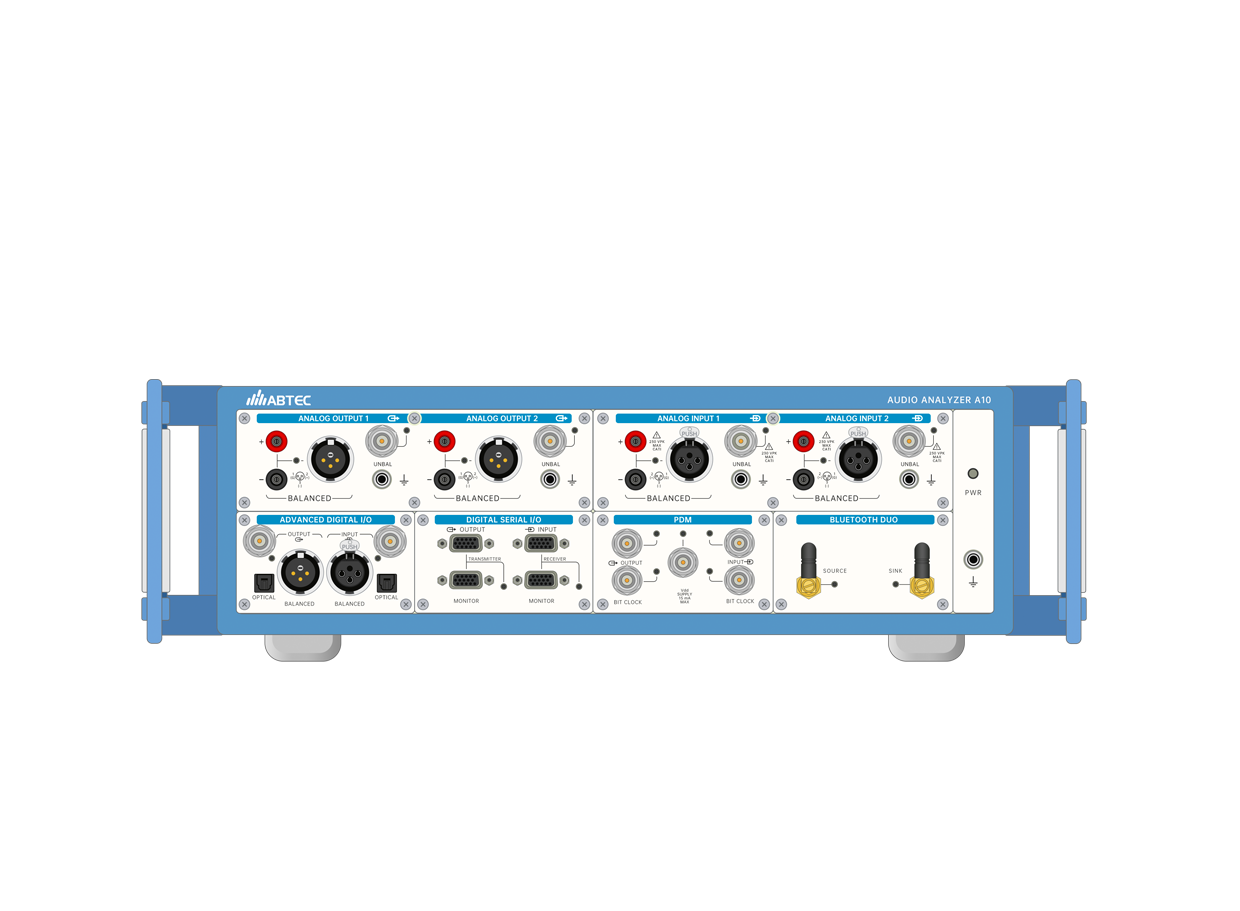
Audio analyzer A10
A10 is currently the most high-performance and fully functional analog 2-channel audio analyzer, fully benchmarking with AP company APx555. It has a high-performance sine signal generator and analyzer, which can generate sine signals up to 204kHz and residual THD+N of less than -120 dB in the system. It has a testing bandwidth of over 1MHz and supports all digital interfaces (ADIO/BT/I2S/HDMI/PDM) and advanced master clock (AMC) modules. It is an ideal testing equipment for the development stage of audio products.
MORE
Sound Calibrator HS6020
The HS6020 sound calibrator is mainly used for testing the sound pressure sensitivity calibration of microphones and acoustic measuring instruments. It has the characteristics of small size, light weight, stable performance, and easy use, and meets the technical requirements of Class I calibrators in IEC942 "Sound Calibrators".
MORE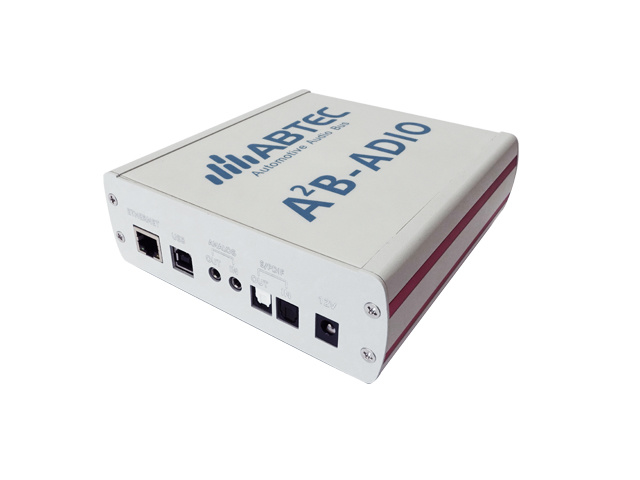
A2B Audio Interface
A2B-ADIO is an analytical solution developed based on the emerging A2B technology for automotive audio buses, specifically designed to meet the measurement needs of manufacturers in the automotive and consumer electronics audio industries. This audio interface has flexible A2B network configuration and rich audio input and output interfaces. Combined with audio testing software, it can efficiently perform audio testing of various A2B components, such as car infotainment systems, car amplifiers, car microphones, etc., making it very suitable for research and production testing.
MORE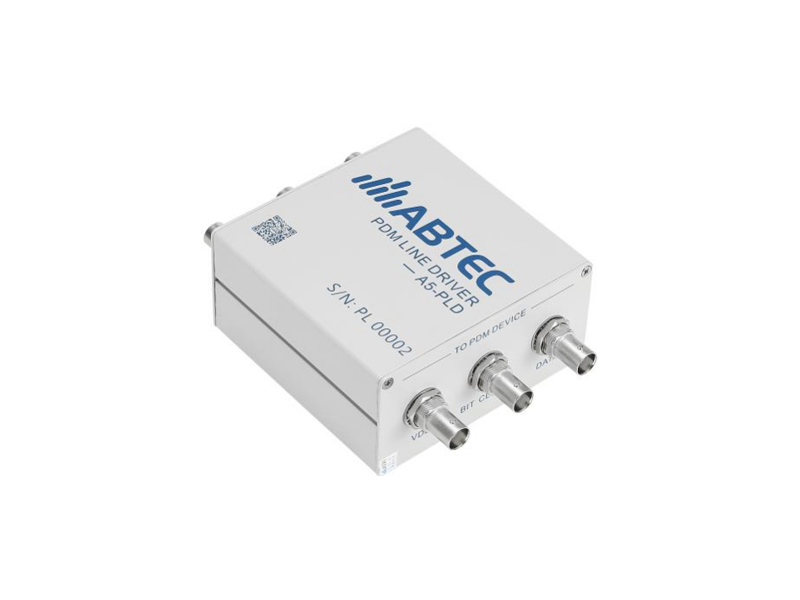
PDM Extension Adapter AB-PLD
The PDM extension cable adapter addresses the distance issue between PDM microphones and audio analyzers during testing. It provides buffering for PDM audio data, allowing the use of cables up to 45 feet (13.7 meters) in length between the DUT and analyzer without loss or alteration of the digital signal.
MORE
AB-HDMI2+eARC Option
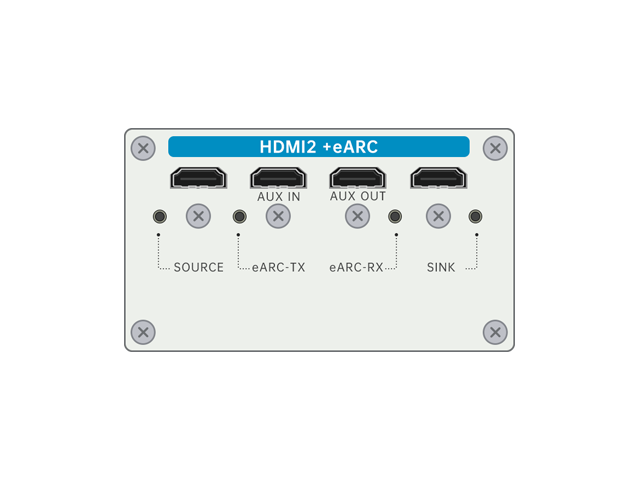
The HDMI 2+eARC module allows engineers to measure HDMI audio quality and audio format compatibility on consumer audio devices such as surround sound receiv-ers, set-top boxes, streaming players, televisions, sound-bars, Blu ray disc players, as well as smartphones and tablets. Provide connections for source and sink devices, as well as additional HDMI connections for auxiliary video input and monitor output. Supporting ARC and eARC has increased the ability to test ARC and eARC audio quality and connectivity on receivers, televisions, and streaming hardware that support them.
MORE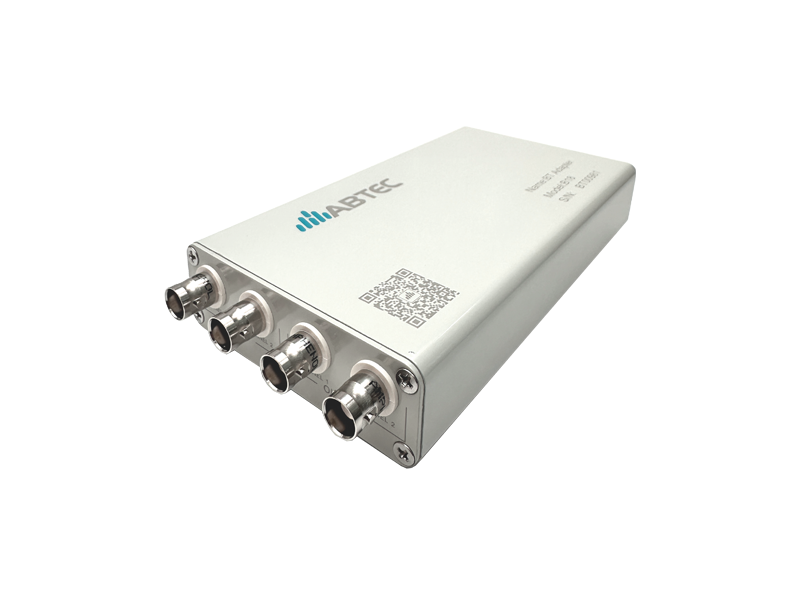
Bluetooth Adapter
Specially designed for Bluetooth products and their automated testing, in addition to providing Bluetooth connection with the tested product, it also offers 2 analog audio input/output interfaces. With the help of an audio analyzer, it can perform Bluetooth audio (A2DP and HFP) indicator testing for the tested product, and support function testing such as up and down songs, addition and subtraction volume, battery level, pause and answer.
MORE
Filter 20K
Dual channel multipole LRC passive low-pass filter, mainly used for audio measurement of Class D amplifiers. It can provide out of band attenuation for audio and reduce the steepness of fast transition edges, providing signal preprocessing for testing accuracy, with a passband of 20-20kHz.
MORE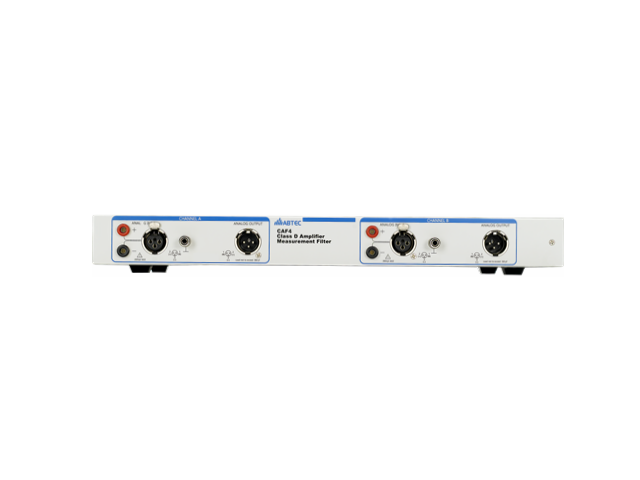
Filter 40K
Dual channel multipole LRC passive low-pass filter, mainly used for audio measurement of Class D amplifiers. It can provide out of band attenuation for audio and reduce the steepness of fast transition edges, providing signal preprocessing for testing accuracy, with a passband of 20-40kHz.
MORE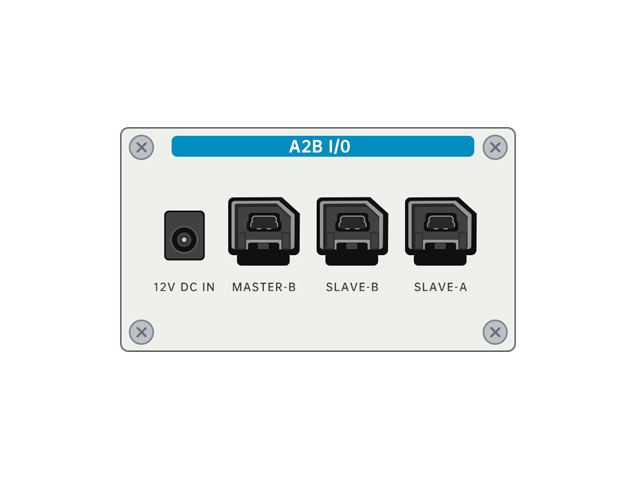
AB-A2B Option
The latest audio analyzer interface option AB-A2B launched by Aptec is a set of audio interfaces developed based on A2B automotive audio bus technology, designed to meet the testing and measurement needs of manufacturers in the current automotive electronics and consumer electronics audio industry. This module has flexible A2B network configuration and interface functions, making it an indispensable tool for designers and manufacturers in the related audio industry. The AB-A2B interface module has independent Master and Salve, which can provide direct connection with the test product and also provide an additional power input interface for auxiliary testing. These interfaces, combined with the powerful audio testing software ATC, can achieve closed-loop multi-channel audio testing of A2B systems and components, such as car infotainment systems, car amplifiers, car microphones, and other related consumer products.
MORE
AB-BT 5 Option
BT 5 is a brand new Bluetooth hardware module, equipped with a new generation of Bluetooth chips and the latest firmware, fully supporting Bluetooth Low Energy (BLE) function. It uses Bluetooth LC3 codec, which can achieve unicast music, unicast voice, and Auracast broadcast audio functions. The BT 5 module provides interfaces for audio devices that adopt the latest Bluetooth specifications, assisting headphones, hearing aids, car audio and video hosts, and other Bluetooth compliant devices ® The R&D engineers and manufacturers of 5 standard audio equipment efficiently and accurately measure the audio indicators of the equipment.
MORE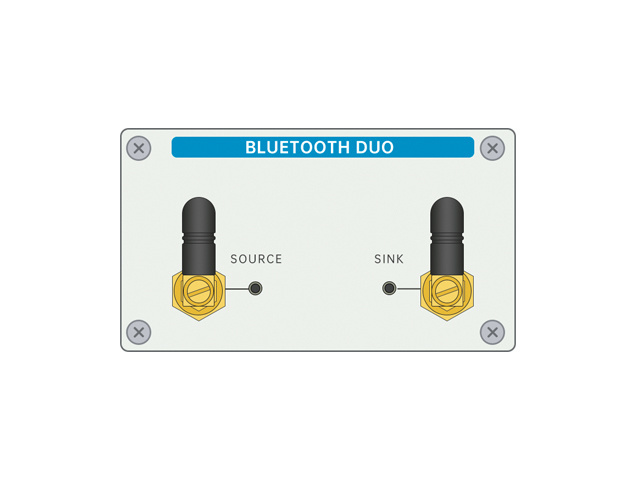
AB-BT-DUO Option
The BT-DUO option is a fully revised and upgraded Bluetooth hardware module with dedicated sources and receivers, new Bluetooth chips and latest firmware, higher RF power, and improved shielding features. And it can provide a series of new audio codecs to meet the diversity of current Bluetooth products. Support new operational features in config-uration files and faster Bluetooth connectivity, enabling engineers to quickly and accurately test Bluetooth products and master their device perfor-mance.
MORE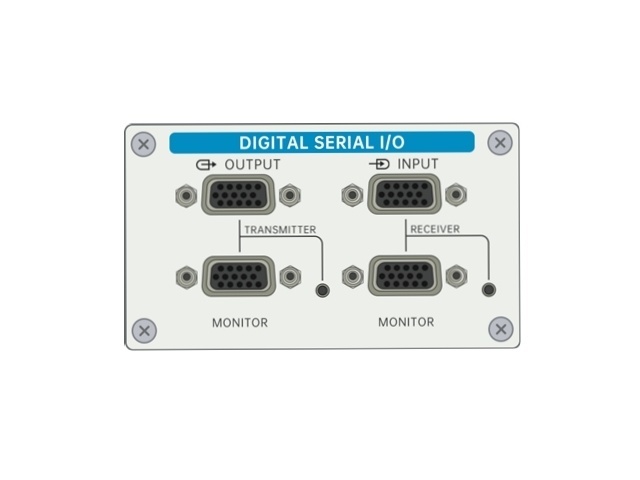
AB-DSIO Option
The DSIO option adds a multi-channel digital serial interface to the audio analyzer, providing direct connections for chip level interfaces and playing a decisive role in the design and development of circuit boards. It is easy to use, with accurate test results, and can be widely used for audio quality testing of various digital devices.
MORE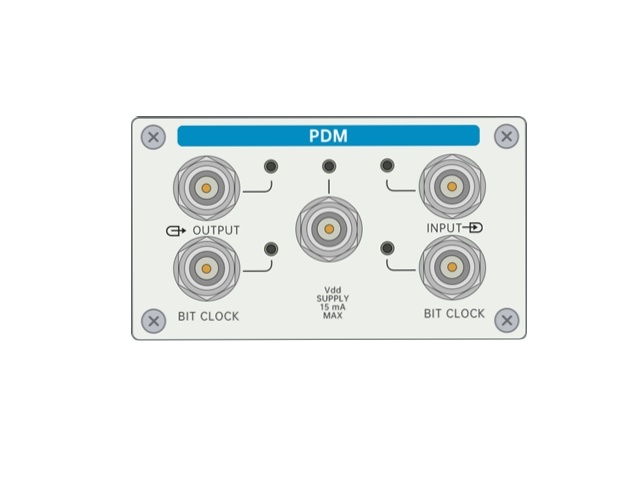
AB-PDM option
Pulse-density modulation (PDM) is a 1-bit, high clock frequency data stream used in MEMS digital microphones, which is widely used in smart phone design. The audio analyzer equipped with A5-PDM module can be directly connected to any device with PDM input or output to achieve comprehensive audio testing required by the highly mobile telecommunications industry.
MORE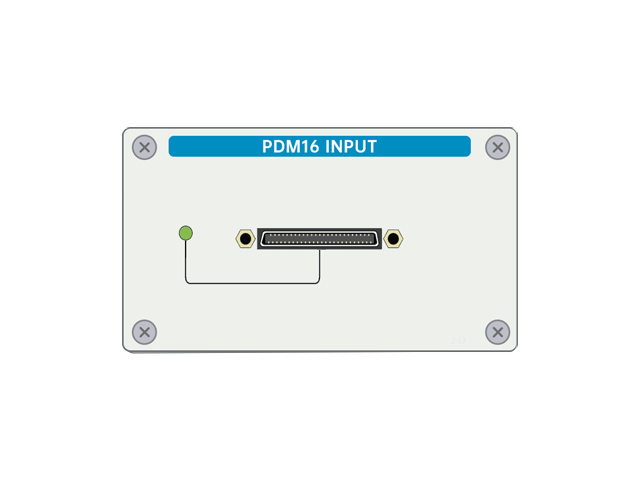
AB-PDM16 Option
PDM16, as an optional input module for Ax series audio analyzers, consists of an input module installed in the analyzer, a remote interface box, and an extension cable. It can provide up to 16 channels of accurate inter channel phase information for sampling, which is the key data for creating MEMS microphone arrays. PDM16 utilizes synchronous sampling based on a common clock to ensure clear and visible phase relationships between channels.
MORE
Follow us
Hotline
4008-368-078
Add:101-102, building 2, No. 1310, Guanguang Road, Kukeng community, Guanlan street, Longhua District, Shenzhen,China
Tel:+86-755-83680078
Email:sales@szaptk.com
Online consultation
Copyright © 2023 Shenzhen Abtec Electronics Co.,Ltd All rights reserved.